
Sustainability at Lake Atitlán
Eco, for real.
Lake Atitlán is one of the most beautiful lakes in the world — and one of the most threatened. Fuego Atitlán was designed, from the foundations up, to tread as lightly on it as a place to stay possibly can.

Why it matters
The lake is fragile — so we built around protecting it
Lake Atitlán is under real pressure, and excess nutrients — phosphorus in particular, much of it carried in by wastewater — are among its biggest threats. Most of the decisions below come back to one idea: keep what we use out of the water, and keep what we build and buy as local as possible.
Solar-heated water
All hot water is heated by the sun, replacing gas and electric water heaters. A small backup covers the occasional cloudy day.
Wastewater-free toilets
Our compost toilets use no water and send nothing into the lake's watershed — a direct answer to the phosphorus that threatens Atitlán.
90% less concrete
The yurts sit on stilts rather than concrete foundations, cutting concrete by around 90% compared with a conventional build.
Local materials
Over 90% of what we built with came from the local area — volcanic stone, natural wood, and hand-woven textiles made by local Maya Kaqchikel artisans.
Waste sorted 8 ways
Every day we separate waste into eight streams — organic, glass, metal, cardboard, soft and hard plastic, electronics, and hazardous. Organic matter is composted on site.
No single-use plastic
Single-use plastic is banned across the property. Guest amenities come from refillable dispensers, and the kitchen skips cling film and plastic bags.
Food
Grown and cooked within walking distance
Our breakfast is made with produce from San Marcos La Laguna's own farmers and market, so food miles stay short and money stays in the village. Expect a típico Guatemalan breakfast and traditional Maya recipes rather than anything shipped in.
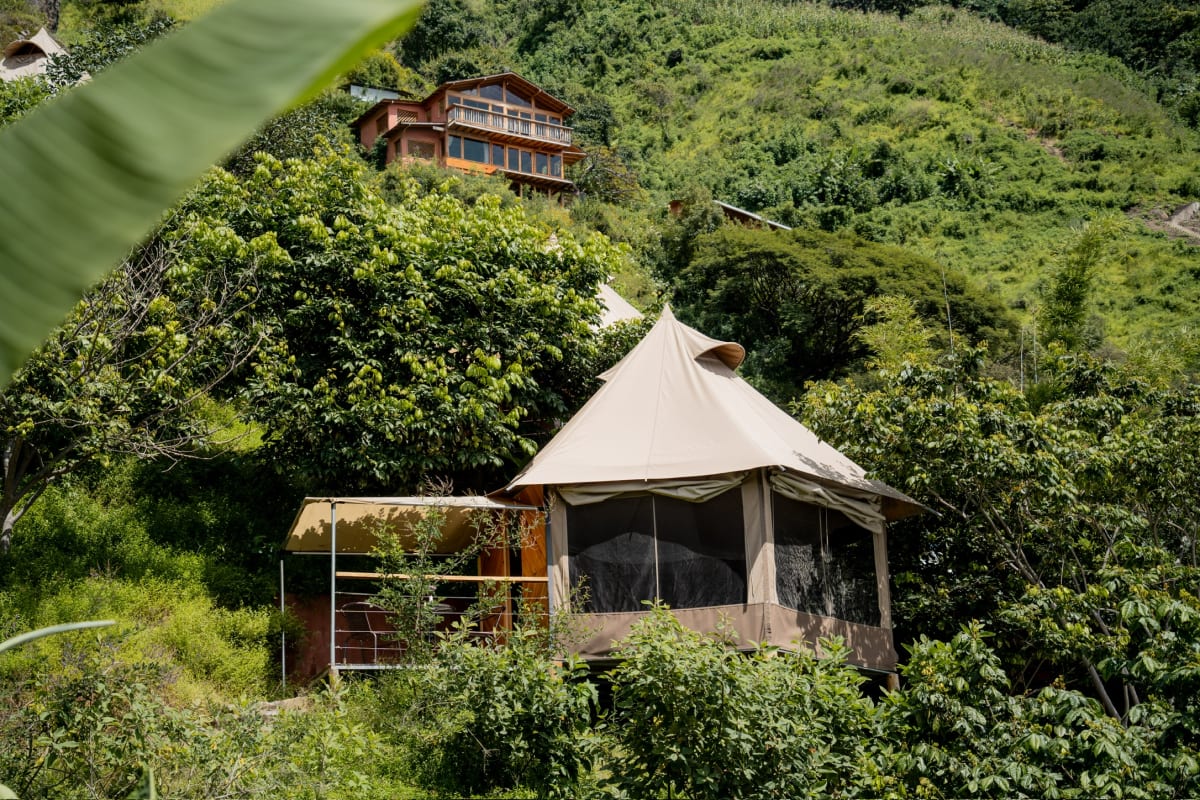
Built from the lake, for the lake
Light on the ground, made by hand
Instead of pouring foundations, the yurts rest on stilts, and rainwater is managed through permaculture design rather than piped away. The textiles and furnishings you'll live with were hand-made by Maya Kaqchikel artisans around the lake — the same hands, the same place.
Community
The lakeside economy, kept local
Our team is recruited from San Marcos La Laguna and the villages around the lake — four of them from the Kaqchikel and Tz'utujil Maya communities. Furnishings come from local artisans, food from local farmers, and when you book direct the revenue circulates here, in the lakeside economy, rather than leaving with a middleman.
No certificate on the wall
We don't buy an eco label to hang by the door. We'd rather put that effort into the lake itself — the toilets, the solar, the sorting, the sourcing. That's what "eco, for real" means.